
 English









NASA Rovers Spot Strange Rocks and Patterns on Mars
-
Dadli News Editorial Team / 22 minutes

- November 23, 2026
- 0
- 2 min read
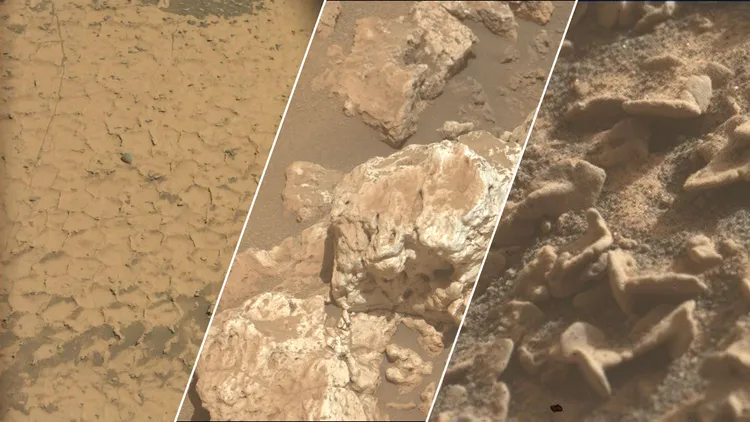
NASA has discovered unusual rock formations and surface patterns on Mars through its Curiosity and Perseverance rovers. The findings include thin, disk-shaped rocks, pale mineral formations and polygon-shaped patterns across the Martian landscape.
NASA’s Curiosity rover recently examined unusual rock formations at a location called Nazca. Scientists described some of the thin, flat formations as resembling potato chips. The rover captured close-up images on November 7 and collected samples for further analysis. Its instruments are helping researchers examine the rocks’ chemical composition and how they formed.
Meanwhile, Perseverance has been investigating pale rocks in an area called Idubi, near Jezero Crater. The formations stand out against the darker Martian terrain. Scientists discovered that the rocks contain hydrated silica, a mineral that can form in environments involving groundwater or hydrothermal activity.
The discovery has attracted scientific interest because hydrated silica can preserve microscopic fossils. Researchers are therefore examining the formations to determine whether they could hold clues about ancient microbial life. Perseverance continues collecting chemical and mineralogical data to better understand the rocks.
Curiosity has also spotted polygon-shaped patterns across the Martian bedrock near Mount Sharp. The formations feature raised ridges outlining small, regularly shaped sections of the surface.
Scientists believe several processes may have created the patterns. These include mineral shrinkage as water evaporated, temperature changes or the expansion and compaction of buried sediments. Researchers are examining the surrounding material to determine which process likely formed them.
The discoveries highlight the importance of continued exploration of Mars. Both rovers are examining terrain that could help scientists understand the planet’s ancient climate, water systems and geological changes.
As NASA continues exploring Mars through its robotic missions, the findings could help researchers better understand whether the planet once supported conditions suitable for life.